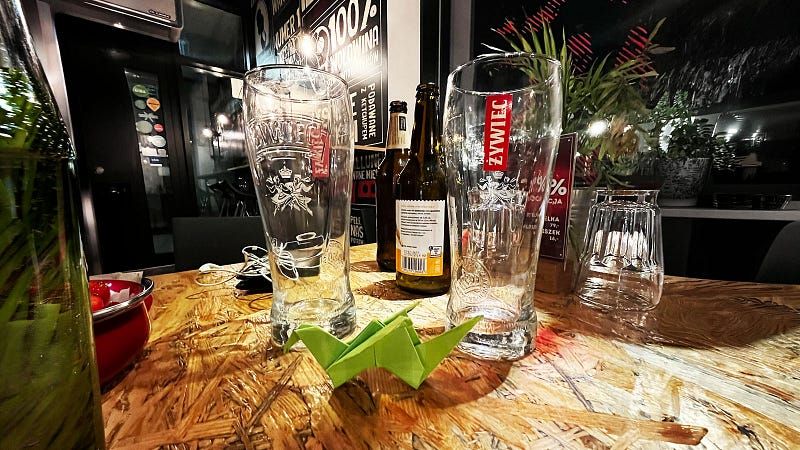
I stopped drinking alcohol on January 1, 2024. What started as a permanent decision became a 15-month personal experiment that changed how I see alcohol, social life, and the cost of a single evening.
Introduction
On January 1, 2024, I decided to stop drinking alcohol. The decision was not framed as an experiment at the time; it was meant to be permanent. A few hours earlier, during a New Year’s Eve gathering, I had fallen asleep after drinking — an alcohol‑induced nap. When I woke up, the room was calm. People were sitting and talking quietly, but the conversations had the familiar drifting quality of a late night with alcohol, and most people were already heavily intoxicated. I remember sitting there for a moment, watching the scene and thinking: “What the hell am I doing here?*. Nothing about that evening was unusual. Gatherings like this had been a normal part of social life for years. I was never a heavy drinker — alcohol usually appeared once or twice a month during small meetings with a couple of friends rather than large parties, and even then I typically drank much less than the others. Still, the pattern after those evenings was consistent: the next day often brought fatigue, mental fog, and a mild embarrassment about conversations that felt exaggerated or unnecessary. That morning the conclusion felt obvious. I decided to remove alcohol from my life completely.
Method
The rule was simple: no alcohol at all. There were no exceptions and no predefined duration. Alcohol disappeared from social meetings, dinners, and casual gatherings. I did not design any complex protocol; the method was simply removal followed by observation. Because alcohol had never been a daily habit, the change appeared mostly in social contexts. I continued writing journal notes throughout the period, which later became useful evidence of how the change affected behavior and perception.
Earlier notes — written long before the final decision — show that alcohol had already been a recurring question in my life. They are not evidence of the experiment itself, but they illustrate the background from which the decision eventually emerged.
Yesterday we drank a few beers and I said many stupid things. I was bragging, arguing about nonsense, swearing, and feeling a strange satisfaction from it. What does this say about me? Is it alcohol or something hidden inside me? (March 5, 2023)
We drank beer again yesterday. These meetings increasingly give me a strange feeling. Not only do I drink alcohol — which I actually don’t want to do — but the conversations become embarrassingly stupid. (April 8, 2023)
I keep being pulled toward the wrong things. Alcohol and fast food — these are probably the two worst habits currently interfering with my life. (October 28, 2023)
Seen from that perspective, the decision on January 1st 2024 did not appear suddenly. It was more like the final step in a longer internal process.
The experiment itself eventually lasted about fifteen months — from January 2024 until early 2025 — although the original intention had been lifelong abstinence rather than a timed trial.
Adaptation
The first weeks were easier than expected. The New Year’s Eve moment had created a strong emotional boundary, so avoiding alcohol required little effort at the beginning. Another factor helped: people who know me are used to unusual lifestyle decisions. By that time I had already quit smoking years earlier, increased physical activity, started dancing at forty, switched to a standing desk, and was making several other lifestyle changes. Against that background, stopping alcohol simply looked like another of my typical “weird” decisions. It quickly became another recognizable “Greg decision.” Friends occasionally joked that the rule probably would not last very long, but those comments actually reinforced the commitment. Not drinking became part of an identity, and identity can be a powerful stabilizer for behavioral change.
Some journal entries from early 2024 captured the first effects of that change.
Yesterday might have been a breakthrough day. I met friends and didn’t drink alcohol. It was a very good decision. I didn’t say stupid things and today I have no hangover. I’m proud of myself. (January 21, 2024)
At the same time, adaptation also revealed friction.
I realized that by stopping alcohol I might have excluded myself from the social life I used to have. I probably have to accept that. (February 21, 2024)
The observation was not dramatic, but it showed how strongly some social habits depend on shared rituals.
Observations
Several patterns became visible during the fifteen months. The most immediate signal concerned time and energy: weekends stopped dissolving into slow mornings and recovery periods. Sunday mornings were clear instead of delayed by fatigue. Saturday evenings also changed structure. Instead of drinking, I often wrote, read, worked on projects, or trained at the gym.
Another observation concerned behavior and self‑perception. When alcohol had been present, certain patterns appeared repeatedly: exaggerated conversations, unnecessary arguments, and a vague sense of embarrassment the next day. Removing alcohol removed that pattern almost entirely.
Social perception also shifted. One year after the decision I attended the same New Year’s Eve gathering again but remained sober. Watching the evening unfold from the outside revealed a predictable progression: voices gradually became louder, conversations less coherent, and behavior increasingly exaggerated. The difference was that this time the embarrassment was not mine.
The most important observation, however, appeared only after the experiment ended. After about fifteen months I decided to drink alcohol again during a meeting with a friend, mostly out of curiosity about whether I missed the experience. The following day brought the familiar pattern of fatigue and dullness. At that moment something became very clear: alcohol no longer felt like pleasure.
It felt like a cost.
For years alcohol had symbolized relaxation, connection, and social freedom. After the experiment it appeared differently. Drinking meant sacrificing the next day — sacrificing health, energy, clarity, and time — in exchange for a short social moment. In that sense alcohol started to resemble a deliberate trade: one evening of looseness purchased with a diminished following day.
This perception gradually changed how I approached social situations. Sometimes drinking began to feel like a social sacrifice — something done for the sake of a moment with other people rather than something personally desirable. It was not about craving alcohol anymore. It was about deciding whether a specific situation was worth the cost of the following day.
Once alcohol started to look like a cost rather than a reward, its role changed almost automatically.
Few months ago I made a small environmental adjustment: I removed wine glasses, vodka glasses, and bottle openers from my kitchen. Alcohol simply no longer had a structural place in my home. The change was minor, but it introduced a small layer of friction between impulse and action.
Conclusion
The alcohol experiment lasted approximately fifteen months. It began as a permanent decision triggered by embarrassment during a New Year’s Eve gathering, but over time it evolved into an observation period that revealed how alcohol interacted with energy, routines, and social behavior. The experiment formally ended when I allowed myself to drink again, yet alcohol never returned to its previous role. Today I do not follow a strict rule, but drinking has become rare and situational. If someone asks whether I drink alcohol, the most accurate answer is probably: almost never.
The most important outcome of the experiment was not abstinence itself but a shift in perception. Alcohol no longer appears as relaxation or entertainment. It appears as a cost — a trade of clarity, energy, health, and time for a brief social effect. Once that change in perspective occurred, the surrounding behavior changed almost automatically.